LUSAS v22: Improved Reinforcement Modeling for Concrete Cracking Analysis
LUSAS v22 introduces significant improvements to reinforcement modeling for the analysis of cracking in reinforced concrete structures. Let’s take a closer look at the changes compared to the previous version, v21, by examining the concrete nonlinear analysis examples.
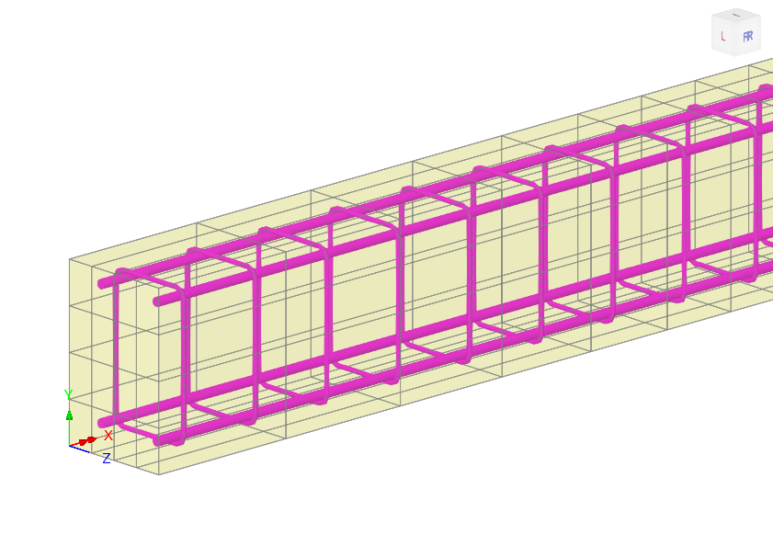
Changes in Reinforcement Definition
In the previous LUSAS v21, to ensure reinforcement and concrete shared the same nodes, it was necessary to split the concrete object where the reinforcement was located. This process of manually connecting nodes for reinforcement and concrete was cumbersome and prone to errors, especially for slightly more complex structures. However, LUSAS v22 allows reinforcement to be modeled as a separate, independent object from the concrete. This enables individual modeling of each structural component, and by drawing the reinforcement separately, the model can be understood more clearly, both visually and structurally. This separate object configuration minimizes engineer errors and greatly facilitates model maintenance and modification.
Automation of Reinforcement Element Definition
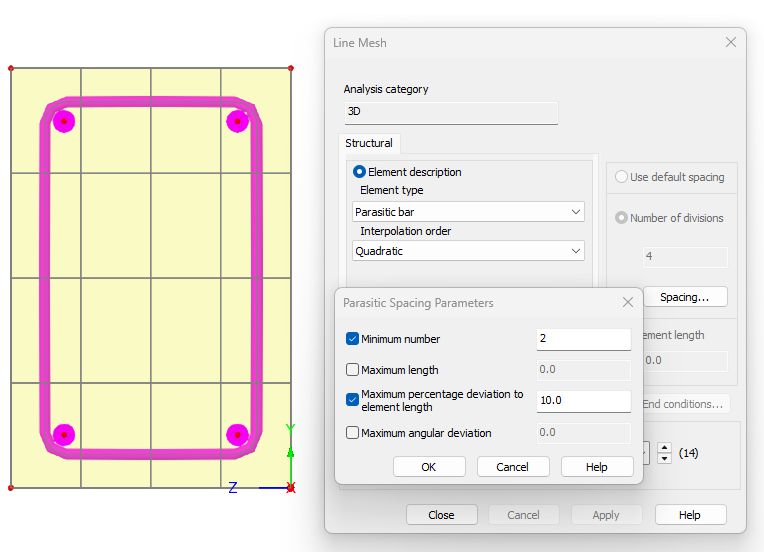
In earlier versions, users had to manually specify the number of divisions for reinforcement elements to match the divisions of the concrete elements. LUSAS v22 automates this process. Based on the number of concrete element divisions, the number of reinforcement element divisions is automatically determined, specifically using the ‘Parasitic Bar’ element. This reduces potential errors that could arise from manual specification of element divisions and significantly shortens modeling time.
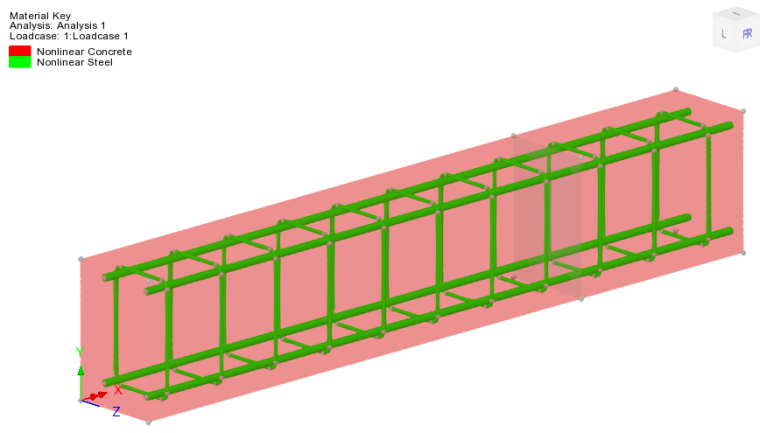
Increased Modeling Efficiency
The new reinforcement modeling method introduced in LUSAS v22 simplifies the construction of analysis models. This makes model maintenance and modification much easier, leading to a significant improvement in overall work efficiency. By reducing modeling time, it contributes to increased productivity in engineering tasks.
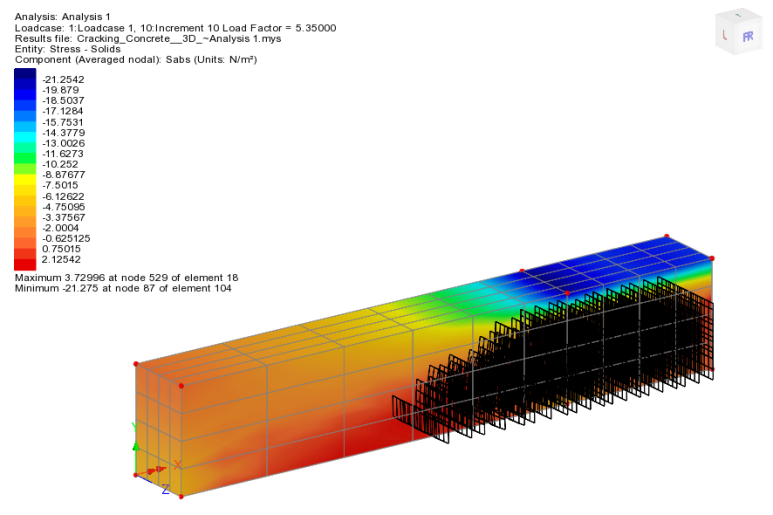
For more detailed information on the cracking analysis of reinforced concrete beams, please refer to the attached example manual.
Attachment: Download Cracked Reinforced Concrete Beam Analysis.pdf